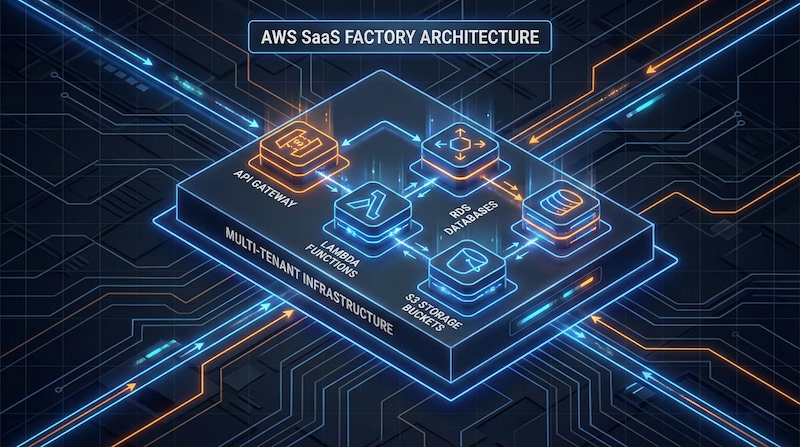
AWS SaaS Factory is a free program from Amazon Web Services designed to help SaaS companies build on AWS infrastructure more effectively. It provides reference architectures, technical guidance, workshops, and access to AWS solution architects — all oriented around the specific challenges of building multi-tenant SaaS products.
This post covers what the program actually includes, which stage of SaaS development it is most useful for, and how AWS tools fit into a practical SaaS architecture.
For context on the broader SaaS development process, see the SaaS product lifecycle guide. For multi-tenancy architecture decisions specifically, the multi-tenant SaaS guide covers the three patterns in depth.
What is AWS SaaS Factory and How Does It Work?
AWS SaaS Factory is a comprehensive program designed to support the development of SaaS solutions. It provides resources, best practices, and technical guidance throughout the entire SaaS lifecycle. For many engineers and managers, this platform is the key to successfully shaping SaaS ideas.
This program offers various training courses and workshops, making it flexible and adaptable for different teams. Participants gain access to AWS experts and tools that can accelerate the development process. AWS SaaS Factory also covers aspects such as multi-tenant architecture and security standards.
Key features of AWS SaaS Factory:
- Scalability through AWS infrastructure
- Technical support and access to experts
- Training and workshops for a better understanding of SaaS methodologies
- Security guidelines for securing applications

AWS SaaS Factory also provides resources for migrating existing solutions to the SaaS model. It helps optimize costs and improve application performance. All these components make it invaluable for the modern SaaS ecosystem.
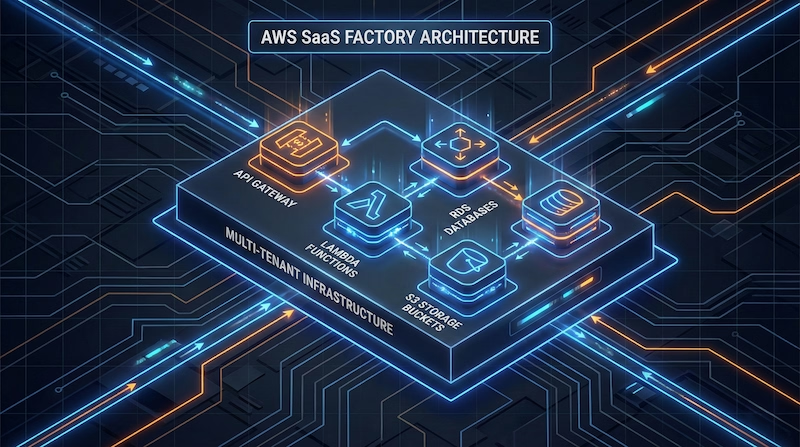
Benefits of AWS Cloud Services for Faster SaaS Development
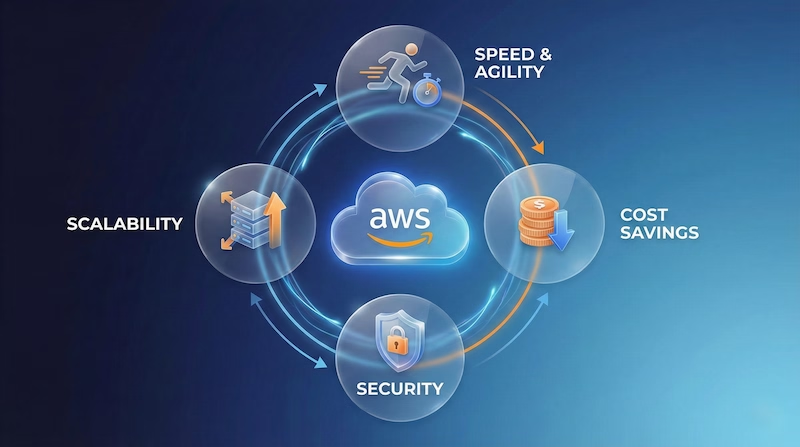
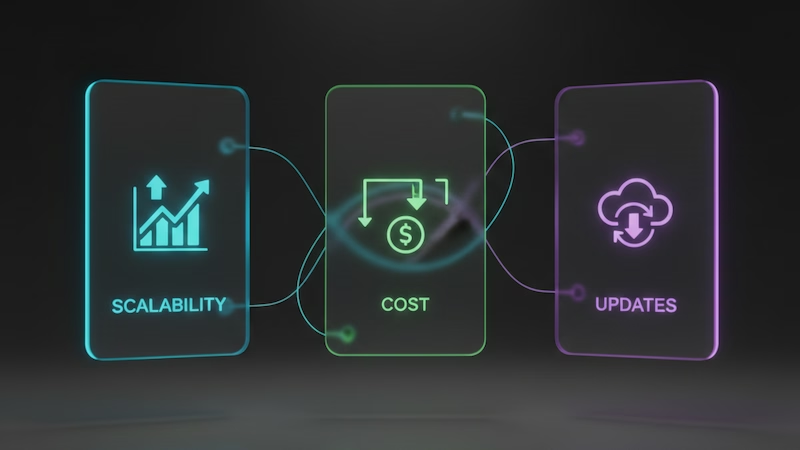
AWS cloud services offer a range of benefits for SaaS development. The first and most important benefit is a scalable infrastructure that allows software developers to easily adjust capacity according to user demand. This can significantly reduce operational costs.
AWS services also accelerate the delivery time of SaaS products. By using pre-configured templates and automated tools, teams can focus on the key aspects of the product. This minimizes the time required for infrastructure and development, which is essential for market competitiveness.
Scalability and Infrastructure Flexibility
AWS infrastructure provides automatic scaling capabilities that adapt to your application's needs. Whether you're handling 100 users or 100,000, the platform seamlessly adjusts resources to maintain optimal performance.
Cost Optimization and Resource Management
Key advantages of AWS cloud services:
- Scalability and flexibility of the infrastructure
- Faster delivery of new features
- Increased security and data resilience
- Efficient resource management for greater savings
Enterprise-Level Security and Compliance
AWS cloud services enhance companies' ability to integrate various technologies such as AI and ML. They enable innovation and customization, resulting in a better user experience. AWS's technological support is the foundation for a secure and successful launch of SaaS solutions.
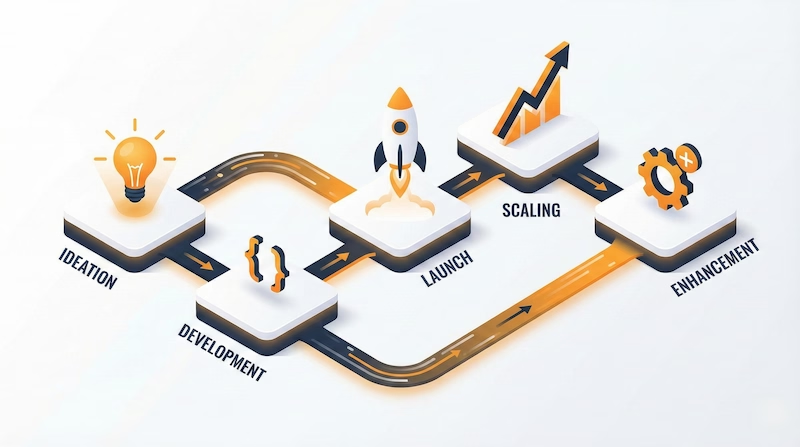
SaaS Product Lifecycle: From Idea to Global Scaling
SaaS product development requires careful planning and execution. The process begins with ideation, where the product's goals and features are defined. Understanding market and user needs is crucial in this phase.
Phase 1: Ideation and Concept Validation
The ideation phase focuses on developing the concept and identifying user needs. Market research, competitor analysis, and validation testing are essential steps to ensure your SaaS idea addresses real market demands.
Phase 2: MVP Development and Testing
After the initial phase, development follows, which includes building and testing. Here, the AWS SaaS Factory proves to be a useful resource. It provides access to tools and practices that facilitate implementation.
Key steps include:
- Rapid prototyping using AWS services
- User feedback collection and iteration
- Performance testing and optimization
Phase 3: Launch and Market Entry
Implementation is not the end of the cycle. The launch phase involves deploying your SaaS product to the market. AWS cloud services help automate operations, enabling seamless growth.
Phase 4: Scaling and Optimization
Scalable solutions are essential for success in the global market. AWS provides tools for:
- Automatic resource scaling
- Performance monitoring
- Cost optimization strategies
Phase 5: Continuous Enhancement
After scaling, the cycle repeats through continuous improvement. Introducing new features keeps the product relevant. AWS tools enable data collection and analysis that inform future iterations.
Key Components of AWS SaaS Factory Program
The AWS SaaS Factory program offers a range of key components that support SaaS development.

AWS Expert Technical Support
The first component includes custom resources and guides. These guides help the team quickly gain insight into best practices and technological possibilities. Development teams can rely on the expertise of AWS engineers throughout the entire application development process.
Training Workshops and Bootcamp Programs
For development teams, education and training are essential. AWS SaaS Factory offers workshops and bootcamps. These activities enhance the team's skills and knowledge, covering:
- SaaS architecture patterns
- Multi-tenant design principles
- Security best practices
- Cost optimization strategies
Reference Architectures and Best Practices
Within the program, architecture design tools are also available. These tools enable the creation of flexible and secure SaaS solutions. Users gain access to reference architectures that facilitate development and reduce the time required to launch products.
AWS Tools for Building SaaS Applications
AWS SaaS Factory provides robust technical support for the efficient development of SaaS solutions.
AWS Lambda for Serverless Backend
AWS Lambda enables backend process automation without managing servers. This serverless architecture reduces operational complexity and costs while providing automatic scaling.
Amazon RDS for Database Management
Amazon RDS simplifies database management with automated backups, patching, and scaling. It supports multiple database engines including PostgreSQL, MySQL, and SQL Server.
Amazon S3 for Cloud Storage
Amazon S3 provides secure, durable, and scalable object storage for your SaaS application data. It offers 99.999999999% durability and integrates seamlessly with other AWS services.
API Gateway and CloudFront CDN
API Gateway manages your REST and WebSocket APIs, while CloudFront CDN delivers content globally with low latency. Together, they ensure fast, reliable access to your SaaS application worldwide.
The combination of these tools with technical support makes development more efficient. Development teams can quickly respond to market needs.
Best Practices for SaaS Security and Compliance
SaaS application design must balance performance and user experience. AWS SaaS Factory sets the standard for innovative and efficient designs. The focus is on creating intuitive and adaptable user interfaces.
Security is a key aspect of every SaaS solution. AWS SaaS Factory helps implement state-of-the-art security practices. These practices include data encryption and access management.
To ensure a high level of security, the following practices are recommended:
- Data Encryption: Protecting user data with encryption at rest and in transit
- Multi-factor Authentication: Adding an extra layer of security for user accounts
- Regular Updates: Ensuring security patches and updates are applied promptly
- Access Control: Implementing role-based access control (RBAC) and least privilege principles
- Compliance Monitoring: Maintaining compliance with industry standards (SOC 2, ISO 27001, GDPR)
AWS offers tools that automate many security procedures. This reduces the risk of human error and ensures system reliability. Implementing these practices is crucial for building secure and user-oriented applications.

Cost and Performance Optimization on AWS
Cost optimization in SaaS applications is crucial for long-term sustainability. AWS SaaS Factory provides strategies that reduce unnecessary costs, improving profitability.
Auto-Scaling Strategies
Dynamic scaling automatically adjusts resources according to demand. This ensures you only pay for what you use while maintaining optimal performance during traffic spikes.
Cost Monitoring and Budget Alerts
Recommended practices for cost optimization include:
- Setting up AWS Cost Explorer for detailed spending analysis
- Configuring budget alerts to prevent cost overruns
- Using AWS Cost Anomaly Detection for unusual spending patterns
- Implementing resource tagging for better cost allocation
Performance Optimization Techniques
Application performance directly impacts user satisfaction. AWS enables you to adjust resources as needed to achieve optimal application performance:
- Metrics Monitoring: Continuously analyzing application performance using CloudWatch
- Optimal Resource Usage: Avoiding excessive spending on computing resources
- Caching Strategies: Implementing ElastiCache for faster data retrieval
- Database Optimization: Using read replicas and query optimization
Implementing these practices helps achieve efficiency and reduce costs. Users thus benefit from reliable and fast SaaS applications.
Successful SaaS Implementations on AWS Platform
Many companies have successfully implemented SaaS solutions using AWS SaaS Factory. These successful implementations provide valuable insights and inspiration for others. Case studies highlight best practices and the results achieved with AWS tools.
One example involves a company that accelerated its time to market by 40%. By using AWS, they were able to reduce operational costs by 35% and improve scalability to handle 10x traffic growth. Another company enhanced the security of its applications through AWS guidelines and tools, achieving SOC 2 Type II compliance within 6 months.
Key success factors include:
- Flexible Infrastructure: Allows for rapid scaling of operations
- Integration with AWS Services: Simplifies the development of new features
- Focus on User Experience: Improves customer loyalty and engagement
- Automation: Reduces manual operations and human error
These case studies demonstrate how AWS SaaS Factory supports various aspects of SaaS development. The results are bolstered by partnerships and access to exclusive resources. Integration aligns business objectives with technological solutions.

Future of SaaS Development: AI, IoT, and Edge Computing on AWS
AWS SaaS Factory continues to shape the future of SaaS development. The program adapts to rapid technological changes and the growing needs of the market. It focuses on innovation, scalability, and security.
As new technologies like AI and IoT become part of SaaS solutions, AWS SaaS Factory provides the appropriate tools and guidelines. This encourages experimentation and enables the creation of more advanced, adaptable SaaS applications.
Emerging trends include:
- AI/ML Integration: Amazon SageMaker for building intelligent features
- IoT Connectivity: AWS IoT Core for connected device management
- Edge Computing: AWS Lambda@Edge for low-latency processing
- Serverless Architecture: Reduced operational overhead with pay-per-use model
- Microservices: ECS and EKS for containerized applications
Its role is expected to grow as companies strive to remain competitive and establish a sustainable advantage.

Conclusion
AWS SaaS Factory provides excellent support for successful SaaS development. It combines resources and expertise to simplify complex processes.
It enables faster time-to-market and performance optimization. Its support helps companies innovate and develop their SaaS solutions securely.
AWS SaaS Factory is most valuable at the scaling phase — when you already have product-market fit and need to harden architecture, reduce costs, and optimise multi-tenant infrastructure. If you are still at the MVP stage, focus on shipping first. See the SaaS MVP development guide for a practical framework on getting to first paying customers before optimising infrastructure.