
Most websites fail not because they look bad, but because the fundamentals are wrong — slow hosting, poor mobile experience, no clear SEO structure. This guide covers what actually moves the needle when building a website in 2025, whether you are a business owner managing an agency or a developer setting up your first project.

Before writing a single line of code or buying a domain, write down one sentence: what action do you want a visitor to take when they land on your site? Book a call, buy a product, read an article, submit a form. Every design and content decision flows from that answer.
Research Your Competition First
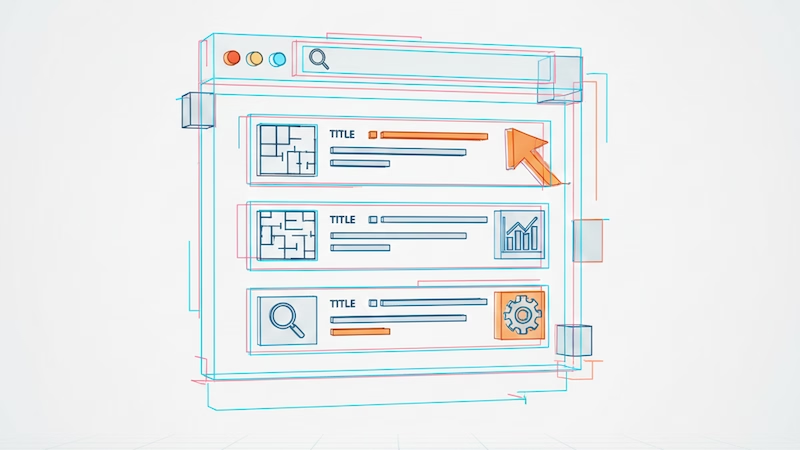
Spend 30 minutes on the top 3 competitors in your niche before designing anything. Note how they structure their navigation, what their primary CTA is, which pages rank in Google, and how fast their pages load. You are not copying them — you are learning what works in the space and identifying gaps you can fill.
Choosing the Right Web Hosting
Hosting is the single biggest determinant of site speed, and speed directly affects both user experience and search rankings. Do not choose hosting based on price alone.
Types of Web Hosting

Shared Hosting (€3–10/month): Multiple sites share the same server resources. Fine for low-traffic blogs or brochure sites. Not suitable for anything that needs consistent performance.
VPS Hosting (€15–50/month): Your own allocated resources on a shared physical server. The right choice for most small businesses with real traffic.
Cloud Hosting (variable): Scales dynamically with traffic. Vercel, Netlify, and Railway are excellent for modern web apps. Often cheaper than VPS for the right use case.
Dedicated Hosting (€80+/month): Full server for your site alone. Only relevant for high-traffic applications.
For most business websites and SaaS products, a combination of cloud hosting outperforms traditional VPS at a similar cost. If you are comparing options for a SaaS product, the Supabase vs Firebase comparison covers the backend hosting decision in detail.
Website Design Principles That Hold Up
Simplicity Converts Better Than Complexity

Every element on a page should serve a purpose. If you cannot explain why a section exists, remove it. Cluttered pages increase cognitive load and reduce conversion rates. Navigation should have no more than 5–7 top-level items. Users should be able to find any page within 2 clicks.
Page Load Speed Is Not Optional

Google's Core Web Vitals are a ranking factor. Target LCP under 2.5 seconds, CLS under 0.1, and INP under 200ms. Practical steps: compress all images to WebP or AVIF format, use lazy loading on images below the fold, minimise JavaScript bundle size, use a CDN for static assets, enable HTTP/2 and browser caching.
SEO: What Actually Drives Rankings in 2025

On-page SEO checklist: title tag 50–60 characters with primary keyword near the front, meta description 150–160 characters, one H1 per page that matches search intent, alt text that is descriptive not keyword-stuffed, internal links with descriptive anchor text, short clean URLs.
Technical SEO

Technical issues silently kill rankings. Run your site through Google Search Console and fix crawl errors, mobile usability issues, missing HTTPS, and missing structured data. Submit sitemap.xml and verify robots.txt is not blocking important pages. For deeper guidance on technical web projects, see how I work with clients needing a full-stack developer.
Monitoring and Analysis
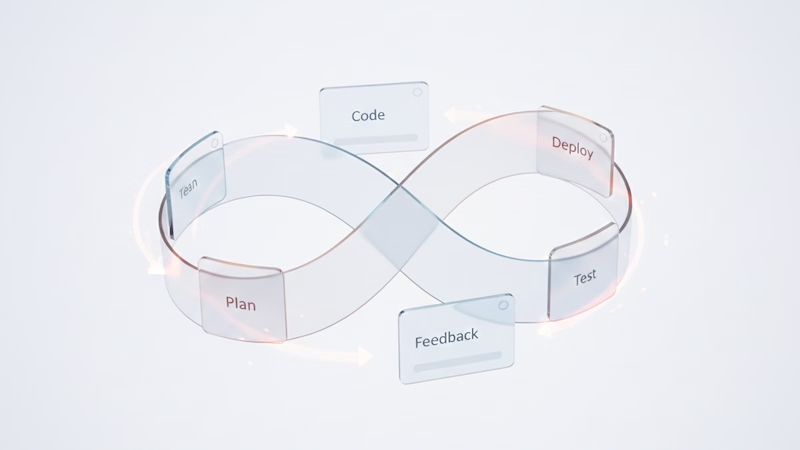
Set up these tools before you launch: Google Analytics 4 for traffic and conversions, Google Search Console for organic search performance, PageSpeed Insights for ongoing speed audits, and UptimeRobot (free tier) for downtime alerts.
Review monthly: which pages are gaining or losing organic traffic, bounce rate by entry page, conversion rate by traffic source, Core Web Vitals trend.
Continuous Improvement
A website is not a project with a completion date. It is a channel that requires ongoing maintenance.
Monthly: update outdated content, check for broken links, review Search Console for new crawl errors, run a speed audit.
Quarterly: audit internal linking structure, review top-performing pages and update them, identify new keyword opportunities, test key conversion flows.
Summary
Building a website that works in 2025 means getting the fundamentals right: fast hosting, clean design, technical SEO hygiene, and content that answers real questions. None of this requires a large budget — it requires consistent effort.
If you are planning a web project and want an honest scoping conversation, start a chat — I work with small businesses and startups on everything from static marketing sites to full-stack SaaS products.